Blog

  • 2017: A Year in Reading

    2017: A Year in Reading

    I’m desperately bad at keeping this personal site filled with useful things. However, after reading Roxane Gay’s 2017 reading list, I felt inspired to do the same. I’ve tried to make clever categories, or just useful ones, whenever possible, but there are a great many sitting towards the bottom and in longer categories still worth your time. I didn’t read too many awful things this year (I generally just stop reading them in the middle), so I haven’t made a tiered ranking system for those, but I’m happy to offer up some personal suggestions if you get in touch with me via Twitter. To the writers (if any of you are reading this) thanks for all the great work.

    Favorite book of the year

    Borne by Jeff VanderMeer

    Numbers two and three

    Barbarian Days by William Finnegan

    Judas by Amos Oz

    Series I tore through and now anxiously await for the final book

    The Kingkiller Chronicles (The Slow Regard of Silent Things, The Wise Man’s Fear, and The Name of the Wind) by Patrick Rothfuss

    The horror I stayed up way past my bedtime to finish (and then still kept me up)

    The Fisherman by John Langan

    Favorite history book (and a favorite nonfiction, in general)

    The Woman Who Smashed Codes by Jason Fagone

    Book whose vast detail should’ve pained me, but instead got me thoroughly invested

    Seveneves by Neal Stephenson

    Dense academic book I couldn’t stop reading

    The Long Shadow by David Reynolds

    Favorite writing about writing

    The Accidental Life: An Editor’s Notes on Writing and Writers by Terry McDonell

    Proof genre is a silly distinction for people to make

    The Kingkiller Chronicles by Patrick Rothfuss

    1Q84 by Haruki Murakami

    The Vorrh by Brian Catling

    The Paper Menagerie and Other Stories by Ken Liu

    Her Body and Other Parties by Carmen Maria Machado

    The Stone Sky by N.K. Jemisin

    The Fifth Season by N.K. Jemisin

    The Wind-up Bird Chronicle by Haruki Murakami

    Books perfectly (if occasionally unfortunately) appropriate for the times

    Home Fire by Kamila Shamsie

    Submission by Michel Houellebecq

    American War by Omar El Akkad

    The Sixth Extinction by Elizabeth Kolbert

    Classics I finally got around to reading

    Les Fleurs du Mal by Charles Baudelaire

    Alternating Current by Octavio Paz

    The Dubliners by James Joyce

    Selected Poems: 1966-1987 by Seamus Heaney

    Disappointments (fiction and nonfiction)

    The Underground Railroad by Colson Whitehead

    Killers of the Flower Moon by David Grann

    Worst figure of speech award

    Meddling Kids by Edgar Cantero

    Obligatory re-read

    Harry Potter by J.K. Rowling

    Reading for articles (not including innumerable academic papers, essays, articles, etc.)

    Bring Out the Dog by Will Mackin

    Gambling and War by Justin Conrad

    You Know When the Men are Gone by Siobhan Fallon

    Youngblood by Matt Gallagher

    Consequence by Eric Fair

    Unknown Soldiers by Neil Hanson

    The Long Walk by Brian Castner

    The Road Ahead by Adrian Bonenberger and Brian Castner

    Terminal Lance: The White Donkey by Maximilian Uriarte

    War Porn by Roy Scranton

    The Confusion of Languages by Siobhan Fallon

    Retire the Colors by Dario DiBattista

    War of the Encyclopaedists by Christopher Robinson and Gavin Kovite

    Dark at the Crossing by Elliot Ackerman

    Reading for book research

    The Hundred Years War: A People’s History by David Green

    Poilu: The World War I Notebooks of Corporal Louis Barthas

    Kaputt by Curzio Malaparte

    Eye-Deep in Hell: Trench Warfare in World War I by John Ellis

    Honorable mentions (i.e. ones I don’t have anything novel or clever to say about, but still want to single out)

    Lincoln in the Bardo by George Saunders

    Commonwealth by Ann Patchett

    American Originality by Louise Gluck

    The Art of Fielding by Chad Harbach

    The Art of the Publisher by Roberto Calasso

    Road Fever by Tim Cahill

    The rest (Many of which are still fantastic!)

    The Reporter’s Kitchen by Jane Kramer

    The Best of Richard Matheson

    In the Not Quite Dark by Dana Johnson

    Someone by Alice McDermott

    The Grace of Kings by Ken Liu

    The Radicals by Ryan McIlvain

    The Changeling by Victor LaValle

    The Collected Essays of Elizabeth Hardwick

    Underground: The Tokyo Gas Attack and the Japanese Psyche by Haruki Murakami

    The Meaning of Human Existence by Edward O. Wilson

    To Show and to Tell: The Craft of Literary Nonfiction by Phillip Lopate

    The Kingdom and the Power by Gay Talese

    Days of Abandonment by Elena Ferrante

    All the Birds in the Sky by Charlie Jane Anders

    2312 by Kim Stanley Robinson

    Sleeping Giants by Sylvain Neuvel

    The Vanishing Velazquez by Laura Cumming

    My Best Friend’s Exorcism by Grady Hendrix

    The New York Trilogy by Paul Auster

    Norse Mythology by Neil Gaiman

    The Vegetarian by Kang Han

    New York by Edward Rutherfurd

    The Gustav Sonata by Rose Tremain

    Fen by Daisy Johnson

    Too Like the Lightning by Ada Palmer

    Listen, Liberal by Thomas Frank

    1984 by George Orwell

    The Windup Girl by Paolo Bacigalupi

    A History of Histories by J.W. Burrow

    The Art of Intelligence by Henry A. Crumpton

    The Aeronaut’s Windlass by Jim Butcher

    The Purple Decades by Tom Wolfe

    The President’s Book of Secrets by David Priess

    Fortune Smiles by Adam Johnson

    The Dead Hand by David E. Hoffman

    The Code Book by Simon Singh

    The Magician King by Lev Grossman

    The Magician’s Land by Lev Grossman

    In the Garden of Beasts by Erik Larson

    Grunt by Mary Roach

    The Georgetown Set by Gregg Herken

    The Laughing Monsters by Denis Johnson

    God’s Middle Finger by Richard Grant
  • The Evolution of the Tomb of the Unknowns – The Atlantic

    Earlier this month, I had an article come out in The Atlantic regarding the ongoing evolution of military memorials and mourning, with a focus on Arlington’s Tomb of the Unknowns. There’s quite a bit that is not said in the piece regarding the composition of the military, changing styles of engagement, and the like, but I enjoyed writing the reflection.

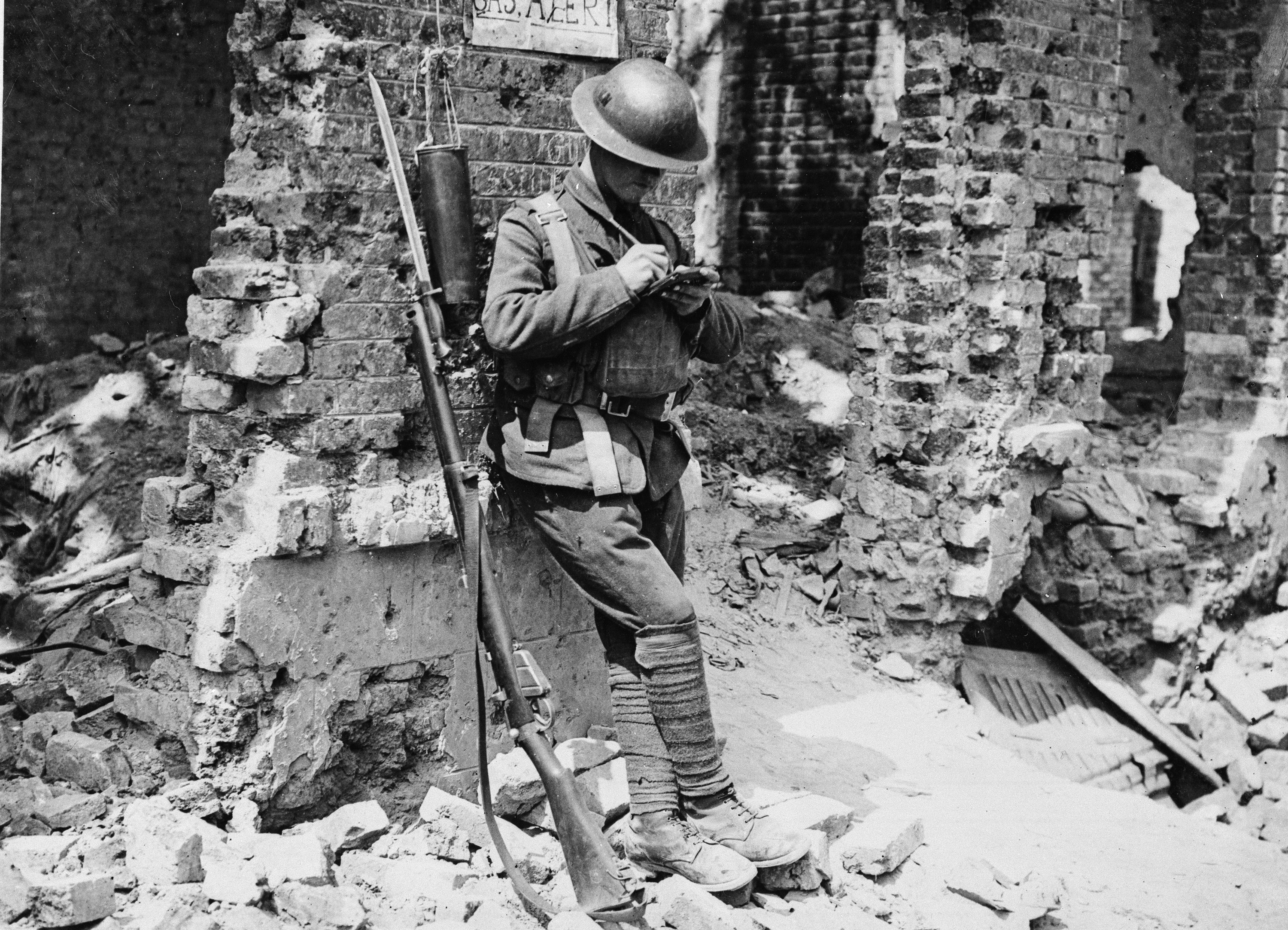
    According to Bill Niven, a professor of contemporary German history at Nottingham Trent University, England, the effect of World War I on how countries memorialize conflict was a cultural turning point—one most neatly embodied in the sharp contrast between France’s modest Tomb of the Unknown and the imposing Arc de Triomphe. Constructed in the early 1800s, the arch memorializes the “glory of [Napoleon’s] Grand Armée,” while the tomb that rests in its shadow, and built more than a century later, has a subdued visage. The arch reflects the aggrandizement of war through extravagant uniforms, neat battle lines, and the ever-present murmur of honor and fidelity, but World War I had trod such formal conceptions through the muddy trenches of France and the Eastern Front. And it was that more desolate aspect of war that the tomb personifies. Here were average citizens—rather than professional soldiers—charging, fighting, and dying seemingly at random and on an industrialized scale few at home could fathom, much less fully comprehend. War itself had been radically altered, and so too had the mourning of those lost to it.

  • War Stories Wraps Up Season One

    If memory serves me correctly, War Stories was founded during the centenary ceremony of the Somme. A few weeks prior to that, my co-conspirator, Angry Staff Officer, and I met up to chat (or more likely, to snark) over drinks in Alexandria. And a few weeks before that, we talked about the use and misuse of history with Nate Finney on the Military Writers Guild’s podcast. As of today, season one of the show has closed out and now begins our inter-season planning and writing grind.

    We set out with a number of goals in mind for the show, some ambitious, others decidedly not. On a fundamental level, we wanted to bridge the individual narratives of war with the larger historical and contextual picture. Through this model, we hoped that both the history and story-interested listeners of the show would be on level playing fields. On a loftier level, I also think there’s something to this model in getting people to better understand and use history, particularly in the uniquely human endeavor of warfare. I don’t think there’s anything particularly novel or innovative about the method, but that’s not to say that it’s practiced enough.

    There were also smaller goals relating to the format of the show and what it would feel like for those listening. There’s something more intimate, or at least potentially intimate, about audio programming. Written words indeed have a massive amount of power over us, but there’s a relationship between storyteller and listener that exists in audio which doesn’t come forth as frequently in writing. The subjects we chose to cover only added to that.

    I don’t want to take away from an upcoming article/interview about the show by hashing over many of the same points I always make, but I do want to say that it’s been an absolute pleasure writing, editing, producing, re-editing, re-writing, etc. it. It has fit the multi-disciplinary, humanistic, conflict-driven type of work which I most enjoy. To be sure, there’s a whole lot of work to be done in order to have the show continue improving. We’re a two man team and that meant essentially continuous work in order to keep our schedule, but with a bit of additional planning I think we’ll have more room to play around with additional content and improve production value.

    If you’re (somehow) just learning about the show, here are our episodes. If you enjoy it, give us a ‘subscribe’.


  • War Stories Episode Two

    This past week, Angry Staff Officer and I released the second episode of our audio show, War Stories. In this episode of the show titled, “Patton at the Saint-Mihiel Salient,” we set the remaining foundation for this season with the story of then Captain George S. Patton’s efforts in developing the AEF’s light tank school and his subsequent exploits on the battlefield of the Saint-Mihiel Salient.

    From here, we’ll be advancing to the interwar years and then WWII. As these will have only iterative additions to the underlying platform, we’ll be really drilling down on the most compelling stories we find in a way that shows the progress being made. As always, thanks for listening.

    Listen: Online | iTunes | RSS Feed


  • War Stories Launches

    War Stories Launches

    If you’ve followed me on Twitter the past six to eight weeks, you’ve probably noticed some cryptic Tweets about a new storytelling/podcast project I’ve been working on alongside Angry Staff Officer. Last week, we announced the show, War Stories, to those outside the small group we asked to serve as beta listeners of the project. I’m pleased to announce that after receiving their feedback and making the necessary edits, we released Episode One on iTunes, Google Play, Stitcher, etc. yesterday.

    Though we’re still getting the hang of doing a more production-intensive show rather than one just focused on cleaning up audio and piecing together a conversation, we’re really pleased with the model that we’ve come up with and we’re eager to continue our first season on armor.

    The show itself is a narrative history show centered on telling the stories behind points in the development of warfare. In each season, we’re taking a topic of warfare and picking out key moments and people who exemplify those moments. The central focus in each episode is telling the story of one of those people, but we’re also weaving in contextual details in order to give a solid foundation on which to base your understanding.

    If you haven’t listened to the released episode yet, I hope you do and email/Tweet/etc. me on what you thought about it. If you already have, there are a couple requests I have:

    • Share it with a friend/family member/colleague/Tweep — We’re setting this up to be a serious project and we think its model appeals to all sorts of people. Getting it outside of our own networks is a big goal on the administrative side of that.
    • Rate and review it on iTunes — this is another way for us to reach outside our own networks. We have about eight weeks post-launch to maximize the potential real estate that iTunes offers us. We’re obviously going to continue past that time, but steadily increasing listenership, reviews, subscriptions during that time goes a long way.
    • Become a patron of the show on our Patreon — in addition to each script containing 5000-6000 words, we also put a lot of time into producing and developing the show. War Stories will always be free to listeners, but if you’re looking for resource guides and transcripts, bonus episodes, etc., you can get them for as low as $3/month. Shoot me an email and I can send along a sample (one is also on the ‘support’ page on www.warstoriescast.com)
  • Exiting the Comfort Zone – from the Atlantic Council’s Art of the Future

    Exiting the Comfort Zone – from the Atlantic Council’s Art of the Future

    Today, I recalled some of the lessons learned from MWG’s recent workshop that took place at Defense Entrepreneurs Forum’s DEF[x]DC conference for the Atlantic Council.

    A conflict erupting in Iran and a speech delivered to Congress on the eve of a Department of Defense shutdown. These were the stories, if only the germinated seeds, that greeted participants as they entered the recent Military Writers Guild workshop at the DEF[x]DC conference. A crowd, save one, entirely out of their comfort zones when confronted with a writing challenge that stemmed from a fictional prompt.

    When first approached with the idea of hosting a writing workshop at Defense Entrepreneurs Forum’s annual DC conference on behalf of MWG, I knew that first and foremost, the workshop should reflect the unique qualities of the organizations it was supporting. For MWG, this task meant building into the program a diversity of viewpoints, backgrounds, and writing styles. For DEF, it meant intellectually and interactively engaging some of the brightest young innovation-focused minds in the national security sphere. What better way to accomplish both these goals than a writing exercise whose only constraints were the mind of a participant?

    Read the full write-up at the Atlantic Council >

  • May 2016 Work

    As we roll into the sweltering summer months of DC, I’m fortunate enough to participate in a number of cool projects with topics that could not be more diverse (at least in the national security realm). They span theoretical, practical, and analytical topics and will hopefully pave the way for more of the same, even though wearing a suit around town will become even more miserable

    The Pen and the Sword

    Thursday, May 5th I’ll be recording the fourth episode of the Military Writers Guild podcast, The Pen and the Sword. In this episode, I’ll sit down with Dr. Ajit Maan and John DeRosa, both MWG members who sit in the academic world and examine narratives. Jiji and John both work on The Project for Narrative Braiding, a really cool project out of George Mason University with both theoretical and practical applications for the conflicts in Iraq and Syria.

    DEF[x]DC

    Recently, I was asked to host a writing workshop on behalf of the Military Writers Guild for the Defense Entrepreneurs Forum, a 501(c)(3) organization filled with bright, young military leaders and their civilian counterparts who seek to develop a culture of innovation within the DOD community. I’ll be hosting the workshop alongside Kate Brannen of the Atlantic Council, John Costello of New America, and Claude Berube of the U.S. Naval Institute. The workshop will focus on a set of creative prompts that both expand participants’ writing styles and experience.

    ASP Podcast

    Finally, on May 16th I’ll sit down with my friends at the American Security Project to discuss the role of the space domain in national security. I became involved in this topic while serving as the government and media affairs officer of ASP, so it’ll be nice to come back to the shop a few years later as an adjunct fellow to discuss where it’s gone since that point.

  • On the (mis)use of history – The Pen and the Sword

    This weekend, I sat down to chat with Nate Finney and Angry Staff Officer about the use and misuse of history in the military and national security professions. There were some really great points, both practical and big-picture, brought up. I also particularly relished the discussion of the latest episode of Hardcore History – a section I knew I wanted to bring up as soon as I heard it on the metro.

    The podcast series, in general, is also hitting a bit of a stride (if I may say so myself). Learning the mechanics behind both producing and hosting is not something I would’ve encountered otherwise. Some of the software has a steep learning curve, but I think we’re quickly coming up with a product that is well and above some of the competitors out there.

    From here, I’m going to work on creating a more consistent schedule for episodes. It’s been a bit of a worry since the inception of the podcast that I would eventually run out of ideas, or at least have a barely filled hopper. That worry hasn’t exactly gone away, but I’ve become slightly more confident in my ability to get it done.

    In any case, here’s the episode. Hope you enjoy!
     

  • The Pen and the Sword, Episode 2 – Carrie Morgan and Kama Shockey

    The Pen and the Sword, Episode 2 – Carrie Morgan and Kama Shockey

    Last week, I had the opportunity to record the second episode of The Pen and the Sword — a podcast sponsored by the Military Writers Guild.

    In this edition of the podcast, I was joined by Carrie Morgan and Kama Shockey, two incredibly talented writers in the civilian space. In the hour-long discussion, we had a chance to talk about the role that civilian writers play in the military and conflict genre, what they bring to the table, and their own experiences.

    I’ve included a link to the episode below.

    Medium Episode Page

  • A Belated Year in Review

    There was much to be thankful for this past year. Perhaps that’s not a particularly insightful phrase. After all, if a year goes by without those moments of brightness, it’d be an awfully disappointing prospect. Nonetheless, it’s still worth mentioning – if not for the mere fact of its existence than for the diversity of opportunities afforded to me both personally and professionally.

    I’ve grappled with how to best organize and prioritize this post. This rumination alone should signal to you the reader that I haven’t been entirely successful in that regard. For my policymaking friends with broad agendas and limited time, I apologize and I hope to continue improving upon it in this new year.

    Much of what I did this past year either directly or indirectly involved writing. In addition to continuing my (semi-) regular posts on strategy, books, and technology, I was also given the opportunity to join the Military Writers Guild in the early months of its founding. Thanks to the efforts of individuals like Ty Mayfield and Nate Finney (the full list of people who I should thank will turn up on my #FollowFridays with regular frequency), our organization has grown to over 100 members in the past year. What’s more, we’ve become a diverse set of individuals with an equal appreciation for some of the more innovative and insightful schools of thought surrounding the military and national security around the globe. For someone who enjoys listening as much as talking, it’s a privilege to interact with them everyday. Going into 2016, I’m both confident and eager that whatever comes out of the Guild will continue to build upon those qualities that we’ve begun to ingrain.

    Looking forward into this next year, I hope to better take advantage of my free time to continue writing. Too many incomplete drafts of works no longer relevant sit in my Google Drive. Even if they’re to remain unpublished, I hope to at least finish those drafts in an effort to better organize thoughts and work on the loquaciousness. I didn’t meet all of the goals I set forth with writing the past year, and for better or worse that only harms me. I also hope to continue giving back in the ways that I can to those who have gotten me to this point and to those around me at a similar point. It’s something I’m reminded of on a regular basis when working with people as great as those mentioned above.

    My unabridged draft of this roundup included my more professional efforts and goals, but I’ve left them out for this version. Consider it my resolution to be a better DC resident and only bring up work within the first fifteen minutes of a conversation rather than within fifteen seconds.